
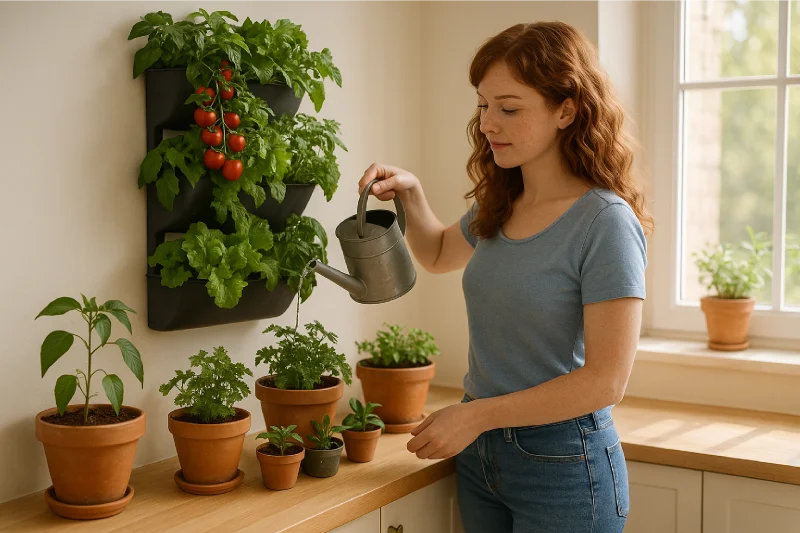
Watering is the quiet rhythm that decides whether an indoor vegetable garden thrives or fades. Indoors, there’s no rain, no deep soil, and no worms to shift moisture through the ground. Every drop comes from your hand, so learning the right balance is everything. This guide explains how often and how much to water your indoor vegetables, how to read what your plants are telling you, and how to adapt through the seasons.
Understanding How Water Works Indoors
When you grow vegetables inside, the entire root zone lives in a confined space. Pots and planters dry quickly because warm indoor air pulls moisture upward and light accelerates evaporation. The key is to keep the compost evenly moist but never wet. The surface should feel cool and slightly springy when pressed, not muddy and not dusty dry.
Touching the soil tells you more than any schedule ever could. Press a fingertip into the top few centimetres. If it feels dry, water soon. If it feels cool and faintly damp, wait another day. Each plant, pot size, and season will have its own rhythm. Once you learn to recognise it, watering becomes intuitive.
Choosing the Right Time of Day
Morning is the best time to water indoor vegetables. The plants take up moisture efficiently when light begins to rise and temperatures are stable. Morning watering also gives the compost time to breathe and dry slightly before night, reducing problems with fungus or mildew. Avoid watering late in the evening unless the plants are visibly wilting, as moisture left in cool soil overnight often leads to rot.
How Much Water to Use
Think of watering as replenishing the soil, not soaking it. Pour slowly and evenly until you see water just begin to trickle from the drainage holes. Allow the pot to drain fully and empty the saucer beneath after about ten minutes. This ensures roots stay oxygenated and healthy.
Small pots of ten to twelve centimetres across generally need around a hundred millilitres per watering. Medium pots, fifteen to twenty centimetres wide, take two to four hundred millilitres. Large planters may need up to eight hundred millilitres. These numbers are guides, not rules. The real test is the weight of the pot — heavy means moist, light means dry. Over time you’ll know by feel alone.
Leafy Greens
Leafy vegetables such as lettuce, spinach, rocket, pak choi, and chard depend on constant moisture. Their leaves are thin and water-rich, and even short dry periods can cause wilting or bitterness. Water lightly each day during warm, bright spells or every second day when light levels are lower. The goal is to prevent the surface from ever drying out completely.
It’s better to water small amounts frequently than to give a heavy drench once a week. Keep water directed to the soil, not the leaves, to reduce the risk of mildew. If the air indoors is very dry, misting lightly in the morning can help. Consistency makes the difference between tender leaves and tough, stressed growth.
Fruiting Plants Indoors
Tomatoes, peppers, chillies, and aubergines all rely on steady hydration. They need deep watering but dislike sharp swings from dry to soaked. A reliable pattern of thorough watering every two to three days works best once plants are established. Check the soil daily when they begin flowering and fruiting, because water demand increases sharply at that stage.
Tomatoes in medium pots often need three to four hundred millilitres at a time. During fruiting, this may rise to daily watering if temperatures stay above twenty-two degrees. Uneven moisture can lead to fruit splitting or blossom end rot, so aim for balance rather than excess. Using a mulch such as fine bark or damp newspaper on the soil surface helps retain moisture and keeps roots cooler.
Root and Bulb Vegetables Indoors
Carrots, radishes, beetroot, and spring onions can grow well indoors in deeper containers. Their watering needs change as they mature. In the beginning, seedlings require gentle, even moisture — never let them dry out completely. As roots lengthen, allow the surface to dry a little between waterings so the roots travel deeper in search of moisture.
Water these crops thoroughly about twice a week in cool weather or every three to four days in warmer rooms. Deep watering encourages straight, firm roots, while shallow, frequent watering leads to stunted or forked growth. Avoid splashing water on leaves, as the tops of root crops are prone to mildew.
Herbs and Compact Vegetables Together
Many gardeners grow herbs alongside vegetables, but watering must suit the plant group, not the container as a whole. Leafy greens, basil, and rocket thrive with frequent light watering. Fruiting plants such as peppers prefer a deeper soak less often. Moisture-loving herbs like mint and parsley enjoy steady dampness but good airflow around their leaves.
If you grow several types in the same space, group them by water needs. Keep thirsty herbs together, fruiting plants in the brightest centre, and root crops in deeper boxes nearby. Each group can then follow its own rhythm without stress.
Recognising Overwatering
Overwatering is the most common mistake indoors. It shows itself in limp or yellow leaves, heavy pots, and compost that smells sour. The soil may look dark and wet even several days after watering. The roots in this state are suffocating, not thirsty.
To fix it, stop watering and move the plant to a brighter, warmer spot. Let the soil dry slowly. Loosen the top layer with your fingers to help air reach the roots. If the problem persists, repot into fresh compost and improve drainage by adding perlite.
Recognising Underwatering
Dryness can be just as harmful. The leaves lose sheen, stems droop, and the soil pulls away from the edges of the pot. Water poured on top may run straight through without soaking in because the soil has become hydrophobic.
In this case, place the pot in a bowl of water for ten minutes so moisture can rise from below. Once the soil feels evenly damp again, drain well and resume regular watering before it reaches that point in the future.
Watering by Growth Stage
During germination and early growth, soil should stay consistently moist. Young roots can’t reach deeper layers yet, so even short dry spells can kill seedlings. Light watering daily or every other day works best during this stage.
As plants grow larger and their roots expand, you can switch to a rhythm of deep watering every two or three days. Always check before you water rather than following the calendar blindly.
When vegetables begin to flower and fruit, maintain steady moisture but increase depth rather than frequency. A thorough soak that reaches the full root zone supports even fruit development. If growth slows or the leaves droop despite moist soil, check temperature and feeding — water alone isn’t always the cause.
In the cooler months, reduce watering by roughly half. Growth slows, light decreases, and the soil holds moisture longer. Let the top layer dry a little more between waterings, but never allow it to become completely dry.
Helpful Watering Techniques
Bottom watering is especially useful indoors. Set the pot in a shallow tray of water for ten to fifteen minutes, allowing the compost to draw moisture up from below. This keeps the surface clean and prevents compaction. It’s ideal for spinach, parsley, and other plants that dislike wet leaves.
Capillary mats can simplify care if you’re managing many pots. They hold a thin layer of water beneath the containers and release it gradually, reducing the need for daily watering.
Mulching with fine bark, moss, or damp coir helps regulate temperature and moisture. It slows evaporation, which means you can water less often without drying the roots.
Self-watering containers are another good option for busy gardeners. These pots store a small reservoir of water beneath the soil, which the roots access gradually. They work best for larger fruiting vegetables but should be flushed occasionally to remove salt build-up.
How Light and Temperature Affect Watering
The warmer and brighter your space, the faster water evaporates. A sunny twenty-four degree room may dry a small pot within a day, while the same pot in a cool, shaded corner could stay moist for several days. Artificial grow lights add warmth, so check moisture daily when using them.
Remember that not every pot will dry at the same rate, even on the same windowsill. Air movement, pot material, and plant size all play their part. Observation always beats assumption.
Troubleshooting Common Water Issues
If leaves droop but the soil feels wet, the roots are suffocating. Hold back on water, aerate the surface, and improve airflow.
If leaf tips dry and crisp while the centres stay green, the air is too dry. Increase humidity by grouping plants together or misting lightly in the morning.
If the compost surface develops a green film, it’s algae — usually from overwatering or poor light. Scrape it away and let the soil dry slightly before watering again.
If water runs straight through the pot, the soil has become compacted or too dry. Submerge the whole pot for ten minutes to rehydrate it fully, then let it drain and resume normal watering.
Creating a Reliable Rhythm
After a few weeks, you’ll start recognising each plant’s pattern. The compost feels lighter when it’s time to water. The leaves lose a bit of gloss. The pot sounds hollow when tapped. These subtle signs are your best guide.
Watering is not about counting days — it’s about timing and observation. Once you find that steady rhythm, your indoor vegetables will respond with vibrant, balanced growth. The leaves will stay firm, the soil will smell alive, and you’ll notice that every watering can you pour is part of a quiet conversation between gardener and plant.