
I wrote this summary because the main artice for this topic is considerable and I realise you may not have the time to read it all, the main article is linked here: How To Preserve Herbs – 10 Easy Methods. Now, lets get started.
Growing herbs indoors or buying them from the shop creates the same problem: what do you do when you have more than you can use immediately? After three years of growing herbs in my small kitchen and testing every preservation method I could find, here’s what actually works.
The Core Challenge
Fresh herbs spoil within three to five days in the fridge. Some, like basil and coriander, go even faster. If you’re growing herbs indoors like me, you can’t control when they’re ready—your basil doesn’t care that you’re away for the weekend. It’s producing leaves now. The solution is learning quick preservation methods that handle small amounts without fuss.
The Two Best Methods (Start Here)
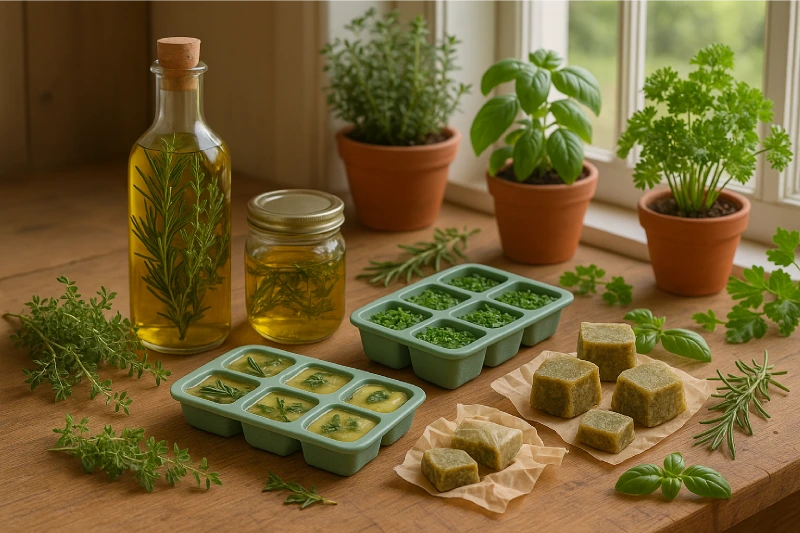
Ice Cubes with Oil or Water – This is my absolute go-to. Takes five minutes. Chop herbs, pack into ice cube trays three-quarters full, cover with water (for soups) or oil (for sautéing), freeze overnight, then store in labeled bags. Each cube equals about one to two tablespoons of fresh herbs. Perfect for continuous small harvests. Lasts six to twelve months frozen.
Herb Butter – Mix 250g soft butter with four to six tablespoons of finely chopped herbs. Shape into a log using parchment paper, chill, then slice off medallions as needed. Takes ten minutes. Lasts two weeks in the fridge or six months frozen. Makes any meal feel special.
Eight More Methods (Choose What Suits You)
Drying – Best for woody herbs like rosemary, thyme, and oregano. Bundle five to eight stems, hang upside down in a dark, dry place for one to three weeks. Lasts one to two years. Don’t bother drying basil or coriander—they lose all flavor.
Pesto – When basil goes mad, make pesto. Blend two cups basil, 50g Parmesan, 50g pine nuts (or cheaper walnuts), garlic, and olive oil. Freeze in ice cube trays or small jars. Lasts three to six months frozen.
Herb Oil – SAFETY WARNING: Fresh herb oil must be refrigerated and used within one to two weeks. Never use fresh garlic in oil. Mix one cup herbs with one cup quality oil, refrigerate immediately. For safer room-temperature oil, use completely dried herbs instead.
Herb Vinegar – Foolproof and safe. Pack herbs into a jar one-third full, cover with vinegar (white wine, red wine, or apple cider), seal with non-metal lid, store in cool dark place for two to four weeks, then strain. No fridge needed. Lasts six to twelve months.
Herb Salt – Blend one cup fresh herbs with three to four cups coarse salt in food processor. Spread on baking sheet to dry slightly, then store in fridge to keep color bright green. Brilliant finishing salt. Lasts six months.
Herb Honey – Pack herbs into jar one-third full, cover with honey, seal and turn upside down every few days for two to six weeks. Strain or leave herbs in. Perfect for medicinal herbs like thyme for coughs. Lasts years.
Herb Broth Cubes – Pack ice cube trays half full with chopped herbs, cover with vegetable or chicken stock, freeze. Instant pre-seasoned stock cubes. Lasts six to twelve months.
Vacuum Sealing – Only if you already own a vacuum sealer (expensive equipment). Extends fridge life to two to three weeks or frozen life to twelve to eighteen months. Not worth buying equipment just for herbs.
Critical Rules You Must Follow
Dry herbs completely before preserving. Touch a leaf to your cheek—if it feels cool or damp, it’s not ready. Moisture causes mold or, with oil, potential botulism.
Label everything immediately. Frozen basil looks identical to frozen parsley. Use permanent marker with herb name and date.
Never store fresh herb oil at room temperature. This creates botulism risk. Refrigerate immediately and use within two weeks maximum.
Match method to how you actually cook. Don’t make herb vinegar if you never use vinegar. Don’t dry herbs if you prefer fresh flavor. Make what you’ll actually use.
Quick Decision Guide
Choose ice cubes if you want the fastest method (five minutes), you’re building up a stash from continuous small harvests, or you’ll use herbs in soups and cooked dishes.
Choose drying if you want the longest shelf life (one to two years), you’re preserving woody herbs only, or you have minimal freezer space.
Choose herb butter if you want something impressive for gifts, you love finishing dishes with butter, or you have ten minutes and butter in the fridge.
Choose pesto if your basil plant has gone absolutely mad, you have a food processor, and you actually eat pesto regularly.
What Actually Works for Common Herbs
Basil – Ice cubes with oil or pesto only. Don’t dry it—turns black and loses all flavor.
Parsley – Everything works. Ice cubes, drying, butter, salt. Easiest herb to preserve.
Coriander – Ice cubes with water or pesto. Don’t dry—loses all flavor.
Thyme – Drying is best. Dried thyme is better than fresh in many dishes.
Rosemary – Drying or ice cubes with oil. Both work brilliantly.
Mint – Ice cubes with water, vinegar, or honey. Don’t dry.
Chives – Ice cubes, butter, or salt. Don’t dry—too delicate.
Sage – Drying or butter. Both excellent.
Oregano – Drying is best. Dried oregano tastes better than fresh.
Dill – Ice cubes with water or butter. Don’t dry.
Common Mistakes to Avoid
Not drying herbs before preserving leads to mold. Not labeling everything means mystery bags in your freezer. Making fresh herb oil and leaving it at room temperature risks botulism. Overfilling ice cube trays creates awkward massive cubes. Using too-high heat when oven-drying burns everything. Making preservation methods you’ll never actually use wastes time and herbs.
Converting Preserved to Fresh Herbs
Use one-third the amount when substituting dried for fresh. If a recipe calls for one tablespoon fresh thyme, use one teaspoon dried. Add dried herbs early in cooking so they rehydrate. Add frozen herb cubes anytime. Add herb butter and salt at the end as finishing touches.
Storage Essentials
Ice cubes: Store in labeled freezer bags, squeeze out air, freeze flat. Lasts six to twelve months.
Dried herbs: Store in airtight glass jars in dark cupboard. Keep leaves whole until using. Lasts one to two years.
Herb butter: Double wrap in parchment then foil for freezer. Lasts six months frozen.
Herb oil (fresh): Refrigerate immediately, use within two weeks maximum.
Herb vinegar: Store in cool dark cupboard with non-metal lid. Lasts six to twelve months.
The Bottom Line
The best preservation method is the one you’ll actually use. Start with one method that appeals to you. Try it with your next harvest. If you use it, brilliant. If you don’t, try something else.
For me, ice cubes with oil and herb butter are what I reach for constantly. They suit my cooking style, fit my available time, and use up small harvests without fuss. Your perfect methods might be completely different.
The goal isn’t becoming an expert at all ten methods. The goal is stopping waste. Whether you achieve that with ice cubes, drying, butter, or any other method doesn’t matter. What matters is those herbs you grew or bought get used instead of going in the bin.
Pick one method. Try it. That’s where you start.