
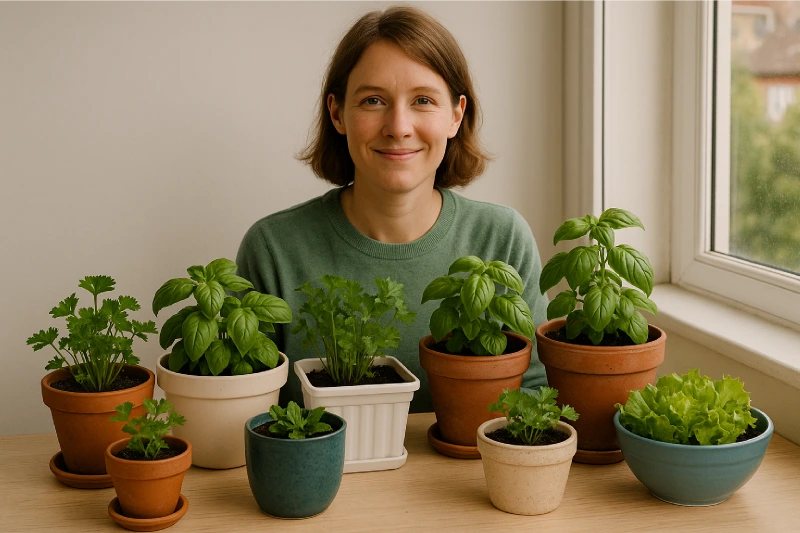
Every pot in my kitchen tells a story. The old terracotta one with a chip on the rim once held my first basil plant. The glazed blue bowl came from a charity shop and now overflows with mint. Even the cracked mug by the sink — it grew parsley so wild I had to cut it back with scissors. I used to think containers were just something to hold soil, but over time I realised they shape everything: how plants grow, how often they need water, even how they taste. The right container makes indoor gardening feel easy and natural. The wrong one quietly works against you.
Why containers matter more than you think
Plants don’t just sit in pots; they live in them. A container decides how the root system develops, how air moves through the soil, and how quickly moisture evaporates. Shallow pots dry faster and keep roots near the surface. Deep pots hold more water and give roots room to dive. Porous materials breathe; glazed ones seal in moisture. If you’ve ever wondered why one plant sulks while another thrives right next to it, check the pot first.
Indoors, you don’t have rain or wind to correct mistakes. That’s why drainage, depth and material matter even more than they do outside. Once I tuned into that, the rest of my indoor garden fell into a calm rhythm — fewer problems, steadier growth, and harvests that arrived right on cue.
Start with the plant: root depth and habit
Before I choose a pot, I think about where the plant keeps its strength. Parsley and basil are shallow-rooted and happiest in wide, modestly deep pots. Mint spreads sideways and appreciates width over height. Lettuce and rocket don’t need depth; they want a shallow tray with generous surface area. Spinach benefits from a little more depth to anchor its leaves. Radishes need room for bulbs to swell — not a bucket, but certainly not a teacup. Spring onions barely notice their neighbours and are content in a crowded trough. Peas and cherry tomatoes have deeper, thirstier roots; they’re at their best in pots that hold a real reservoir of compost. Chillies sit in the middle — not fussy, but opinionated: about 20 cm deep and they’re at peace.
If you’ve read my guides to How To Start An Indoor Garden From Scratch, Easiest Vegetables To Grow Indoors, or Growing Chillies on a Windowsill, you’ll have met these root personalities already. This article is the missing piece: matching those temperaments to the containers that let them shine.
Materials in the real world
I’ve grown in almost everything you can imagine — terracotta, plastic, ceramic, metal, wood, and the occasional repurposed kitchen bowl. Each behaves differently, and once you feel those differences in your hands, choosing becomes easy.
Terracotta is honest and forgiving. It breathes, which helps prevent soggy roots, and it warms gently in the sun. It also dries faster than you expect. I water terracotta a touch more often, and I love it for basil, parsley and lettuce trays because it stops the compost from staying heavy. Over time it develops a pale bloom that marks the minerals from water; I leave it there — it feels like a pot’s memory.
Glazed ceramic is beautiful and steady. The glaze seals the sides, so moisture leaves mainly through the top. That means you water less often, which suits thirstier plants like tomatoes, peas and chillies. The weight keeps tall plants upright, but it can be a burden on a narrow sill. I keep ceramic for spots where the pot won’t need moving.
Plastic is practical. It’s light, cheap, and comes in every size. Good plastic pots with plenty of drainage holes are underrated. They’re perfect for seedlings and for larger plants you need to lift and turn regularly to follow the light. I use the plain ones and slip them into nicer cachepots once the watering’s done.
Metal looks chic but behaves like a radiator. In strong sun it can heat the root zone too much; in winter it chills quickly. If I use metal indoors, I keep a nursery pot inside as a liner and treat the metal as decoration, not the active container.
Glass is for flowers, not roots. It has nowhere for water to escape unless you drill it. I sometimes root mint cuttings in glass because you can watch the roots grow, but once they’re ready for soil, they move to a pot with drainage.
Wood is charming and roomy. Indoors it can hold moisture well and insulate roots. It also needs a liner or it will slowly drink and warp. My wooden trough by the kitchen window has a hidden plastic insert with drainage holes; the wood provides the look, the insert keeps the plant healthy.
Self-watering planters deserve a note. A reservoir below, a wick or column of compost above — they’re a gift if you travel or forget waterings. I use them sparingly. They’re brilliant for tomatoes and chillies when life gets busy. For lettuce and herbs, I still prefer the feel of a conventional pot because it teaches your hands the plant’s rhythm. But if your home runs dry quickly or you have heating on in winter, a small reservoir pot can be the difference between steady growth and constant wilt.
Drainage is non-negotiable
Water needs a way out. If a pot doesn’t have holes, it’s a vase, not a home. I’ve ruined plants by trusting cachepots to behave like planters. Now my rule is simple: the inner pot must have holes; the outer pot can be pretty. I water in the sink or over a tray, let the excess run through, then return the plant to its decorative cover.
If you can’t resist a vessel without holes — an old bowl, a charity-shop find — create a double pot: plastic nursery pot inside, bowl outside. Slip it out for watering, let it drain completely, and only then put it back.
At the base of many pots I still add a thin layer of broken terracotta or coarse gravel. It doesn’t “improve drainage” in the scientific sense, but it prevents holes clogging with compost and keeps that last centimetre from becoming a swamp. It’s a simple safeguard that’s saved more than one parsley plant in my kitchen.
Size, depth and shape (the quiet geometry of roots)
Shallow and wide suits leaves. Deep and steady suits fruit. There are exceptions, but if you memorize nothing else, remember that.
For lettuce and salad mixes, a tray 8–10 cm deep is perfect. That shallow depth warms quickly, drains cleanly and invites frequent picking. Spinach is happier with 15–20 cm so its roots can anchor a bit deeper. Radishes need 15 cm as a safe minimum to form crisp bulbs. Spring onions don’t fuss; 10–15 cm is fine, and a long, narrow trough lets you harvest like a row in miniature. Peas enjoy 20 cm or more, with stout twigs or short canes to climb. Chillies and cherry tomatoes both settle beautifully in pots around 20–25 cm deep and wide. They don’t want a barrel indoors — just a generous, stable home that won’t tip as fruit develops.
Shape matters, too. Tall, narrow pots look elegant but can leave the top inch bone-dry while the bottom stays wet. Broad, slightly squat pots keep moisture more even and give shallow roots room to breathe. Most herbs and leafy greens appreciate breadth over height. The plants that prefer a little height are the ones that carry weight above — peas on supports, tomatoes on short stakes — because that extra depth anchors them.
Matching containers to crops (what works in my kitchen)
Basil is at its sweetest in a 12–15 cm wide pot, terracotta or plastic, filled with light, airy compost. It resents soggy feet, so breathable pots suit it perfectly. Parsley is more tolerant; it grows cheerfully in glazed ceramic or plastic because it likes steady moisture. Mint wants width and will quietly take over whatever you give it; a broad glazed bowl is my favourite because it reins in the drying and lets stems spread.
Lettuce belongs in trays — terracotta if you don’t mind watering a touch more often, plastic if you want consistency. Spinach enjoys a medium pot with some depth, plastic or ceramic, and rewards you with leaf after leaf. Radishes are happiest in a deeper tray than you think, plastic or ceramic, as long as the compost stays loose. Spring onions couldn’t care less about glamour; give them a simple trough and they’ll repay your indifference with endless greens.
Peas surprise people. A deep ceramic pot with a handful of twiggy sticks becomes a tiny hedge of tendrils and flowers. Tomatoes need a steady ceramic or thick plastic pot; weight becomes your friend when a cluster of fruit pulls on the stem. Chillies are content in plastic or ceramic as long as they’re not swimming — 20 cm is the sweet spot in my kitchen, with a saucer underneath to catch the run-off.
When you’re cross-referencing crops, this is where internal links help. If you’re choosing for chillies, you’ll find extra detail in Growing Chillies on a Windowsill. For the leafy crops, Easiest Vegetables To Grow Indoors covers sowing depth, thinning and harvesting in more depth than I can here.
Light, heat and the pot beneath them
Sunlight changes how a pot behaves. On my east-facing sill, terracotta pots drink faster after a bright morning; ceramic stays calm until afternoon. In high summer, a dark-coloured container can heat the compost more than you expect. If a plant starts to flag at midday even when watered, I shuffle it a few inches back from the glass or choose a paler pot that reflects rather than absorbs warmth. Likewise in winter: a pot pressed against icy glass will chill the root zone. I slide a thin cork mat under my pots to insulate them and pull them a hand’s width away from the window at night.
Moving plants without drama
Indoors, we are the wind and weather. I move pots to chase light, tidy shelves, or make room for dinner. Weight matters. A big glazed pot looks lovely until you lift it three times a week. For anything that needs regular turning — tomatoes, peas, chillies — I choose a lighter inner pot and a decorative cover I don’t mind shifting. For herbs I snip daily, I use small terracotta or plastic that fits in one hand, because that’s how I live with them: kettle on, snip the basil, water the parsley, move the mint away from the hot hob.
Saucers are not decorations; they’re tools. A saucer that fits properly lets you water generously and come back after ten minutes to pour away the excess. It protects your sill and gives you control.
Soil volume and watering rhythm
More compost doesn’t just mean more room; it means more forgiveness. A larger pot dries slower and buffers against both heat and missed waterings. The trade-off is simple: small pots teach your hands; larger pots buy you time. When I’m learning a plant, I often start smaller to feel its rhythm, then pot up once we understand each other.
If you’re unsure about size, choose the next one up from what seems obvious. Most beginner problems I see are underpotted plants — roots circling the bottom, water rushing through, leaves yellowing from stress. A little more room smooths out everything.
Up-potting: when to move house
Plants tell you when they’re ready. Roots poking from the drainage holes, water passing straight through, leaves shrinking in size — those are my cues. I tip the pot gently and look at the root ball. If the roots form a dense, pale net with compost barely visible, it’s time. I move up just one step — say, from 12 cm to 16–18 cm — rather than jumping to something huge. Too much fresh compost around a small root ball can hold water the plant isn’t using.
The first watering after potting up is generous and patient. I water, wait, water again, and let the pot drain completely. Then I return it to bright light and leave it to settle before feeding resumes the following week.
Cleaning and reusing pots (the quiet hygiene that saves you heartache)
Between crops, I wash pots in hot, soapy water with a splash of white vinegar. It lifts the mineral film and discourages lingering pests. Terracotta needs an extra scrub with a stiff brush; plastic is forgiving and quick. If a plant suffered pests, I’m a little stricter: I soak the pot, then rinse thoroughly and let it dry in sunlight on the sill. It sounds fussy, but it prevents tiny problems from hitchhiking to the next season.
Decorative covers, labels and lived-in beauty
I like my plants to feel at home, and that means my pots don’t match. A simple plastic nursery pot inside a pretty cover gives the best of both worlds: proper drainage and a kitchen that looks loved. I tuck plant labels into the rim — pencil on a wooden stick or a dab of chalk marker on the inside of the cachepot. Labels stop you second-guessing yourself months later when everything looks uniformly green.
If you paint pots, keep the paint on the outside only. Roots need to breathe through terracotta; sealing the interior changes how the pot behaves. I’ve learned to let materials do their job without too much interference. The most beautiful pots in my kitchen are the ones that have earned their stains.
Sustainability and budget
Indoor gardening can be as thrifty as you like. I started with yoghurt tubs, tin cans and mugs with broken handles. A nail and a careful tap create drainage. A square of old mesh or a coffee filter over the holes keeps compost where it belongs. You don’t need to buy an entire wardrobe of pots on day one. Let your plants earn their upgrades.
Terracotta is affordable and lasts years. Plastic stretches your budget the farthest and is endlessly reusable if you store it out of direct sun when empty. Charity shops are treasure troves — bowls and planters just waiting for an inner pot with holes. When you do treat yourself to a beautiful glazed pot, choose a neutral colour you’ll love with everything. It will become part of your kitchen, like a favourite teapot.
Common mistakes (I’ve made them so you don’t have to)
No drainage holes. It’s the silent killer. If your plant is struggling and you’re watering kindly, check the bottom. A plant can’t survive with nowhere for water to go.
Pots that are too small. Roots circle, water evaporates, and the plant never quite settles. If a plant looks busy above but tired below, it needs a step up.
Pots that are too big too soon. A tiny plant swimming in a large pot is a recipe for overwatering. Build in stages; let roots colonise each new home.
Matching every pot in one thirsty material. A whole windowsill of terracotta looks romantic until a heatwave arrives. Mix materials so your watering rhythm stays sane.
Letting cachepots fill with runoff. I’ve watched perfectly good parsley drown quietly inside a beautiful cover pot. Water in the sink, let it drain, then put it back.
Troubleshooting by pot feel
If the top is dust-dry but the plant still droops, check depth. Sometimes the surface lies and the lower compost is wet. Slide a finger deeper or use a wooden skewer as a dipstick.
If leaves yellow from the bottom up and the pot feels heavy two days after watering, the container is holding too much moisture. Repot into a more breathable material or add more perlite to the mix next time.
If a plant wilts every afternoon in a tall, narrow pot, it may be drying at the top while staying wet at the bottom. A broader pot balances moisture better.
If a plant is toppling as fruit forms — tomatoes and chillies do this — weight the base with a heavier pot or add discreet support. Often it’s the container, not the plant, that needs help.
A word on convenience
There are clever self-watering pots now that remove much of the guesswork. For people short on time or with very dry homes, they can be a blessing. I keep one or two in rotation for busy seasons. They don’t replace the pleasure of tending plants, but they do keep everything alive when life pulls you away. If you’re curious, try one with a cherry tomato or a chilli — the plants that repay steady moisture with extra fruit.
Bringing it all together
In the end, choosing containers is about listening with your hands. How does the pot feel after you water? How quickly does it lighten? Does the plant lean toward the window or sit content? Over the years, my pots have taught me to pay attention. Now, when I pick up a container, I can almost feel the plant that belongs there.
If you’re starting your container collection now, begin with what you have and one or two thoughtful purchases. A terracotta pot for a sweet basil. A deeper ceramic pot for a cherry tomato. A long plastic trough for spring onions. A broad glazed bowl for mint you’ll brew into tea. As you grow more, your containers will tell the story of your garden — and like all good stories, they’ll gather patina and personality along the way.
When you’re ready to put these choices to work, you’ll find the practical, crop-by-crop detail in Easiest Vegetables To Grow Indoors and Growing Chillies on a Windowsill, and the whole first-steps approach in How To Start An Indoor Garden From Scratch. Choose your pots with care, and the rest of your indoor garden becomes beautifully simple.