
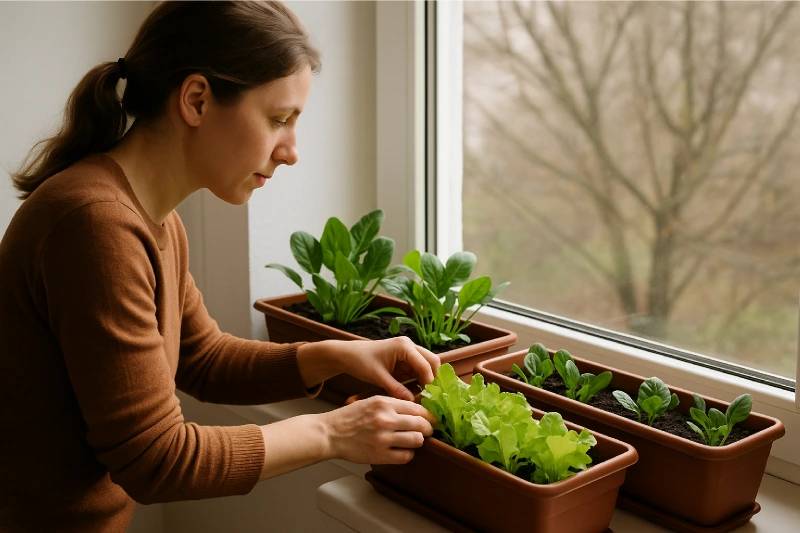
At the beginning I was inexperienced, I assumed vegetables were off-limits. Herbs seemed manageable — neat little pots that sat happily on the windowsill — but vegetables? I thought they belonged outdoors, in soil, under sky. Then one winter, when the garden centre shelves were bare and my parsley was still thriving by the kitchen window, I realised I’d been thinking too small. If lettuce and spinach can grow in cool, sheltered soil, why not in a pot beside the sink?
That thought turned into an experiment that changed how I see homegrown food entirely. I didn’t start with anything complicated — just a few easy vegetables that didn’t need deep soil or endless sunlight. Lettuce, spinach, radishes, spring onions, peas, and later, a single cherry tomato plant. They became my small indoor patch, each one teaching me something new about patience, light, and the quiet satisfaction of watching something edible take shape from seed.
This is how I grew them — not in theory, but in the mess and joy of real life, learning by touch and mistake. If you’ve ever looked at your windowsill and wondered if you could grow your own food there, the answer is yes. You can, and you should.
Starting Out: Getting Seeds and Supplies
Most of my indoor vegetables start from seed. I buy them from small UK suppliers like Mr Fothergill’s or Thompson & Morgan, because their packets always list how deep to sow and how much light each plant needs — invaluable when you’re learning. Some vegetables, like cherry tomatoes and peas, are just as easy to start from young plants, which I pick up from the local market or garden centre in spring.
You don’t need special pots to begin. I started with old mugs, yoghurt tubs, and small terracotta pots — anything with drainage holes. Drainage is the only non-negotiable rule. A layer of gravel or crocks at the bottom keeps roots from sitting in stale water. For soil, I use peat-free compost mixed with a handful of perlite for airiness. It keeps things light enough that roots can breathe but moist enough to hold water between drinks.
My indoor growing space is my kitchen windowsill — east-facing, with bright morning sun and soft afternoon light. If your window faces north or stays shaded, a small LED grow light can make all the difference. It doesn’t need to be fancy; I use one on a simple timer during the darker months to keep growth steady.
Lettuce: The Easiest of All
Lettuce was the first vegetable that made me feel like a proper grower. It’s quick, forgiving, and endlessly generous. I start mine from seed because it’s cheaper and more satisfying than buying young plants. I usually sow a mix of loose-leaf types — ‘Salad Bowl’, ‘Little Gem’, and sometimes a colourful variety like ‘Red Oakleaf’.
I fill a shallow tray or a wide pot about ten centimetres deep with moist compost. Then I scatter the seeds lightly across the surface, cover them with a fine dusting of soil, and press gently with my fingertips. Lettuce likes cool, even conditions, so I keep the tray in bright light but away from harsh midday sun.
The seeds germinate within a week. At first, they look like delicate threads, impossibly thin, but they toughen quickly. Once the seedlings reach a couple of inches tall, I thin them — snipping out extras so each plant has space to spread. It always feels ruthless, but without thinning they crowd each other out.
Lettuce roots are shallow, so they’re perfect for windowsills or shelf planters. I water from below when possible, pouring a little water into the saucer and letting it soak up through the compost. It keeps the leaves clean and reduces the risk of rot.
After about four weeks, I start harvesting. I don’t pull the whole plant — I just pick the outer leaves, leaving the centre intact. This “cut and come again” method gives me fresh salad for months. The flavour of homegrown lettuce is different — softer, fresher, slightly sweet, never bitter like the bagged kind. It’s one of those small daily luxuries that makes you appreciate how alive real food is.
Spinach: Steady and Reliable
If lettuce is easy, spinach is its sturdier cousin. It prefers cooler temperatures and steady moisture, which makes it ideal for indoor conditions. I usually sow ‘Baby Leaf’ spinach in early spring and again in autumn.
I start with a continer about fifteen centimetres deep, filled with moist compost. Spinach seeds are larger and easier to handle than lettuce, so I sow them about a centimetre deep and a few centimetres apart. They germinate in under two weeks.
Once they’ve grown a few true leaves, I thin to the strongest plants. Like lettuce, spinach can be harvested leaf by leaf — just snip the outer leaves when they’re hand-sized and let the centre keep growing. Indoors, I get several rounds of harvest before the plant tires.
The key with spinach is not to let it dry out completely. The leaves wilt quickly but bounce back if watered in time. I water every two or three days in moderate light, and every day during warm spells. If it gets too hot, it tends to bolt — sending up a flower stalk — which makes the leaves bitter. Indoors, I’ve found this happens rarely, because temperatures stay even.
There’s a quiet pleasure in growing spinach. It doesn’t shout for attention, it just grows — dark, glossy leaves that feel cool under your fingers, ready whenever you need them.
Radishes: Instant Gratification
Radishes were a revelation. I grew them on a whim, expecting them to be fussy, but they turned out to be the easiest of the lot. From seed to harvest in under a month, they’re the vegetable equivalent of instant feedback.
I sow radish seeds in a deep tray, about fifteen centimetres, because the roots need space to swell. The seeds are large enough to space evenly — about two centimetres apart. After covering them lightly with compost, I water gently and keep the pot near the brightest window.
The first shoots appear in days, and within a week, the leaves look like tiny umbrellas. They need good light and steady moisture; if they dry out or get too warm, the roots grow woody. I check the top of the soil every morning — if it feels dry, I water.
After three weeks, the red tops start to peek through the soil. That’s my cue. I twist one out, rinse it, and bite in — crisp, peppery, and fresh. You can’t buy that flavour. I stagger my sowing, planting a few seeds every week for a steady supply.
Radishes also taught me that growing food doesn’t have to take months. Sometimes all it takes is a few weeks and a bit of curiosity.
Spring Onions: Grown and Re-Grown
Spring onions are a beginner’s secret weapon. You can grow them two ways — from seed or from scraps. I often do both.
When I’m in a hurry, I save the white roots from a bunch of shop-bought spring onions. I place them in a small glass of water so the roots are submerged but the tops stay dry. Within days, new green shoots begin to grow. After a week or so, I transplant them into small pots of compost, burying the base just below the surface. They keep growing right where they left off.
For a longer-term crop, I start from seed. I sow them shallowly in a long trough, spacing seeds about a centimetre apart. Spring onions grow well crowded, and their fine roots don’t mind sharing space. They like steady light and regular watering — not too wet, not too dry.
When they reach pencil thickness, I snip the greens as needed. The flavour of homegrown spring onions is cleaner and milder than the supermarket kind. I also love how self-renewing they are — even when I cut them back, they regrow from the base.
There’s something immensely satisfying about that cycle. It’s a small daily reminder of how resilient plants can be if you just give them a chance.
Peas: Sweet and Cheerful
Peas feel like a small miracle indoors. The first time I tried them, I wasn’t sure it would work, but dwarf varieties like ‘Kelvedon Wonder’ or ‘Sugar Ann’ do beautifully in containers. I start them from seed in early spring.
I fill a deep pot — at least twenty centimetres — with compost and push each seed about an inch deep. I space them a few centimetres apart in a ring around the edge of the pot. Within a week, the seedlings appear, sturdy and bright.
Peas need support, even dwarf ones, so I push a few short twigs or bamboo skewers into the pot for them to climb. The tendrils find them instinctively, curling and grasping. It’s one of those small wonders that never gets old.
They prefer cool air and bright light, so I keep them close to the window but away from strong midday sun. The soil should stay slightly moist — dry compost stops pods forming.
You can harvest peas in two ways: as shoots or pods. The young shoots are delicious in salads or stir-fries, tender and sweet. If you let them mature, you’ll get proper pods within six to eight weeks. I pick them as soon as they swell, before they get tough.
Peas were the first indoor plant that made me feel like I’d crossed a threshold — from herbs to something more ambitious. When you see the pods filling out, you realise how much life can happen in a single pot.
Cherry Tomatoes: The Bright Finale
Tomatoes are the one plant that make every indoor garden feel complete. They’re a little more demanding than lettuce or radishes, but still perfectly doable. I grow dwarf or trailing varieties like ‘Tiny Tim’, ‘Balcony Red’, or ‘Tumbling Tom’. They’re bred for containers and stay compact enough for a sunny kitchen.
I usually start from seed in early spring, sowing them in small pots and covering lightly with compost. Tomato seeds need warmth — at least 20°C — so I germinate them near the radiator or under a clear plastic lid to hold in heat. Within a week or two, the seedlings appear.
Once they’re a few inches tall, I move them into larger pots about twenty centimetres deep. Tomatoes love rich soil, so I mix compost with a spoonful of worm castings or organic fertiliser granules.
Light is crucial. Tomatoes want full sun — as much as you can give them. I keep mine on the brightest windowsill and turn the pots every few days so the stems grow straight. Once flowers appear, I tap the stems gently each morning to help pollination. Indoors, you have to play the bee.
Watering tomatoes is an art. They hate drying out, but they also resent sitting in water. I water deeply and evenly, then wait until the top inch of soil feels dry before the next drink. Once the fruits begin to swell, I start feeding weekly with a tomato fertiliser.
When the first cherry tomatoes ripen — tiny jewels turning from green to orange to red — it feels like magic. I still remember the first time I picked one, still warm from the sunlight, and bit into it. The flavour was astonishing — sharp, sweet, and alive in a way shop tomatoes never are.
Tomatoes remind you that effort matters. They take more care than lettuce or peas, but they give more back too.
A Word on Convenience
There are modern indoor growing kits that take much of the guesswork out of light and watering. They’re clever and tidy — ideal for people who travel often or live in dim flats. But for me, I like the slower rhythm of soil, water, and window light. The daily check-ins, the small adjustments, the quiet companionship. It’s not just about the food — it’s about the connection.
Why Growing Vegetables Indoors Changes Everything
Once you start, it’s hard to stop. My windowsill has become a small landscape of colour and texture — lettuce bowls, spinach leaves, pea tendrils, and the occasional tomato cluster glowing like lanterns. The harvests are modest, but they’re deeply personal.
Growing vegetables indoors taught me that space isn’t what matters — attention is. A single pot of lettuce can feed you for weeks. A tomato plant in a bright corner can produce dozens of fruits. What matters most is showing up — watering when needed, turning the pots, noticing the small signs of growth.
If you’ve ever thought you needed a garden to grow your own food, start with one pot and a packet of seeds. Lettuce, radish, spinach — they’ll reward you almost immediately. Then maybe peas, then a tomato. And before long, you’ll look around your kitchen and realise it’s no longer just a place for cooking. It’s a place for growing, too..