
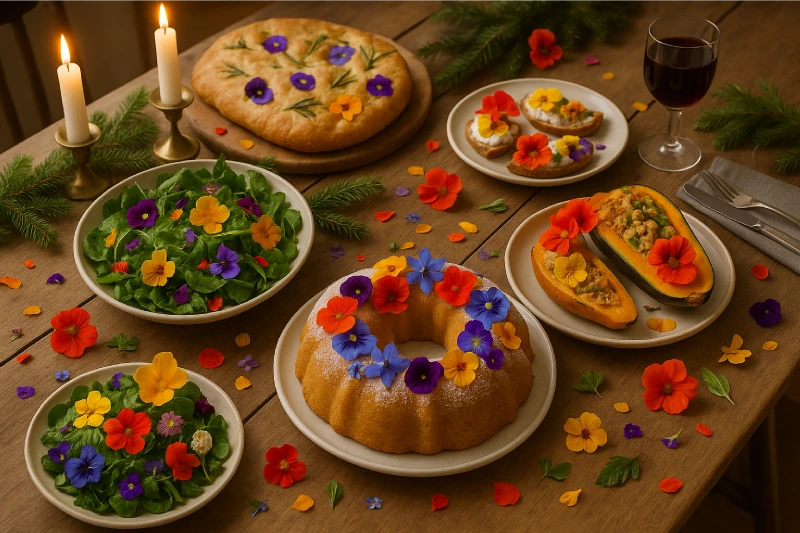
The first time I garnished a salad with nasturtium flowers I’d grown on my windowsill, my dinner guests were stunned. Not just because the bright orange blooms looked incredible against the greens, but because they were edible—and I’d grown them in my apartment. One friend asked where I bought them, assuming they came from some specialty store. When I told her they came from the pot sitting three feet away, she didn’t believe me at first.
That moment crystallized something I’d been discovering over my years of indoor gardening: edible flowers aren’t just beautiful, they’re surprisingly practical to grow indoors, and they solve a problem I hadn’t fully appreciated until I started growing them myself. Store-bought edible flowers are absurdly expensive, often treated with chemicals not meant for consumption, and packaged in plastic. Growing them at home means I know exactly what’s touched them—nothing but water, organic soil, and light.
I’m Polly, and I’ve been growing edibles indoors and on my small patio for about five years now. Edible flowers came later in my journey—I started with herbs and greens—but they’ve become one of my favorite things to grow. They’re more challenging than lettuce but more rewarding than almost anything else I’ve tried. This guide covers everything I’ve learned about making edible flowers thrive indoors.
The Beauty and Flavor of Edible Flowers
Before we dive into the practical side, let’s talk about why you’d want to grow edible flowers indoors in the first place.
They’re genuinely delicious, not just decorative. This was my biggest surprise. I initially grew edible flowers for visual impact, expecting them to be bland or purely ornamental. I was completely wrong. Nasturtiums have this peppery, almost radish-like bite that’s genuinely assertive. Violas taste like mild lettuce with a subtle floral note. Calendula petals are slightly tangy and add depth to dishes. These aren’t garnishes you push aside—they contribute real flavor.
Store-bought edible flowers are prohibitively expensive and questionable. I discovered this when I tried to buy edible flowers before I grew my own. A tiny plastic clamshell with maybe 12-15 small flowers cost $8-12 / £7-10 / €8-12 at specialty stores. That’s insane for something that wilts within days. Worse, I learned that many “edible flowers” sold for food aren’t actually grown with food-safe practices. They’re often ornamental flowers that happen to be technically edible but have been treated with pesticides and fungicides not approved for food crops. The regulations are murky at best.
Growing your own guarantees purity. This matters more to me now than when I started. I use organic potting soil and seeds, and I control every input. No mystery chemicals, no plastic packaging, no questionable growing practices. In a world where we’re increasingly concerned about what’s in our food, this control is valuable.
They transform meals visually. I won’t pretend this isn’t a factor. A simple salad becomes restaurant-quality with a few colorful flowers scattered on top. Cakes and desserts look professional. Even a weeknight dinner feels more special. There’s genuine joy in eating something beautiful that you grew yourself.
They’re surprisingly practical for small spaces. Unlike fruiting vegetables that need huge containers and months of growth, many edible flowers thrive in small pots and bloom within 6-8 weeks. My nasturtiums live in 15 cm (6-inch) pots. Violas are happy in even smaller containers. You can tuck them into corners of your indoor garden without sacrificing space for more “practical” crops.
The mental health benefits are real. I know this sounds abstract, but having flowers blooming indoors—especially in winter—genuinely improves my mood. They’re living color and beauty in my space, and unlike cut flowers that die in a vase, these keep producing. The fact that they’re also edible feels like a bonus on top of their ornamental value.
Understanding Edible Flowers: Safety First
This is the section I wish someone had emphasized when I was starting out. Not all flowers are edible, and even edible flowers require some caution.
Edible doesn’t mean all flowers taste good or are safe. Many flowers are technically non-toxic but taste terrible or cause digestive upset. True edible flowers are those that are both safe and pleasant-tasting. This is a smaller category than you might think.
Never eat flowers unless you’re 100% certain of the identification. This is non-negotiable. I only grow edible flowers from seeds or plants I’ve purchased specifically labeled for culinary use. I never harvest flowers from ornamental plants, garden centers (unless specifically labeled edible), or random outdoor plants. Some toxic flowers look remarkably similar to edible ones.
Even edible flowers can cause reactions. People with pollen allergies, hay fever, or sensitivities to certain plant families should introduce edible flowers cautiously. I always tell guests what flowers are in a dish in case anyone has concerns. I introduced them to my own diet one variety at a time, starting with small amounts, to ensure I didn’t have reactions.
Growing method matters as much as flower type. This is critical: ornamental flowers—even if they’re technically edible species—are often treated with systemic pesticides and fungicides not rated for food crops. These chemicals persist in plant tissues. You cannot wash them off. This is why I only grow edible flowers from seed or from sources explicitly selling them for culinary use. I never buy ornamental flowers and assume they’re safe to eat.
Common toxic flowers that might be in your home: Daffodils, lily of the valley, azaleas, rhododendrons, oleander, foxglove, and many bulb flowers are toxic. Some cause mild stomach upset; others can be seriously dangerous. Sweet peas (the climbing flower) are toxic, though regular garden peas flowers are edible. It’s confusing, which is why I stick to known safe varieties.
Flower parts matter. For many edible flowers, only the petals are edible—stamens, pistils, and sepals can be bitter or cause mild reactions. I remove these before eating. For some flowers like nasturtiums, the entire flower is edible. I’ll cover this specifically for each variety.
Avoid treated flowers completely. This includes flowers from florists (heavily treated), most garden centers (unless labeled organic/edible), and any flower from a source that can’t verify it’s been grown with food-safe practices. Even your own outdoor garden flowers may not be safe if you’ve used any pesticides or if neighbors spray nearby.
Best Edible Flowers for Indoor Growing
I’ve tried growing about 20 different edible flower varieties indoors over the past few years. Some were fantastic, others struggled or failed completely. Here’s what actually works indoors, based on real experience.
Nasturtiums: The absolute best for beginners
If you grow only one edible flower indoors, make it nasturtiums. These have been my most reliable, productive, and delicious indoor flower. They germinate easily (7-10 days), grow quickly, tolerate imperfect conditions, and produce abundantly.
The flavor is distinctive—peppery and sharp, like arugula or watercress but with floral notes. Both flowers and leaves are edible. The round, lily-pad-like leaves have the same peppery taste and are excellent in salads. Flowers come in vibrant oranges, yellows, and reds.
Nasturtiums are technically climbing/trailing plants, but dwarf varieties (‘Jewel Mix’, ‘Whirlybird’) stay compact and bushy—perfect for containers. I’ve also grown trailing types (‘Spitfire’) and let them cascade over shelf edges, which looks beautiful.
They need moderate light (4-6 hours direct sun or 10-12 hours under grow lights), consistent moisture, and well-draining soil. They actually flower better in slightly poor soil—too much fertilizer produces lush leaves but fewer flowers. They’re one of the few plants I deliberately don’t feed heavily.
Violas and pansies: Delicate and prolific
Violas (including Johnny jump-ups) and pansies are closely related and both edible. I prefer violas for indoor growing—they’re smaller, more delicate, and seem to handle indoor conditions better than full-sized pansies.
The flavor is very mild, slightly vegetal, like tender lettuce with a subtle floral note. They’re not assertive like nasturtiums. I use them more for visual impact, though the taste is pleasant. The entire flower is edible, though I often remove the green sepals as they’re slightly bitter.
Violas bloom prolifically. A single plant will produce dozens of flowers over weeks if you deadhead regularly (remove spent blooms). Colors range from deep purple to yellow to white to multi-colored varieties. ‘Sorbet’ series works well indoors.
They prefer cooler temperatures (13-18°C / 55-65°F), which can be challenging indoors. I grow them during winter months when my apartment is cooler, or in my coolest room. They need good light—at least 6 hours of direct sun or 12-14 hours under grow lights. They’re more finicky about heat than nasturtiums; above 21°C (70°F), flowering declines.
Calendula (pot marigold): Bright and productive
Calendula produces cheerful orange and yellow daisy-like flowers that are both beautiful and useful. The petals have a slightly tangy, mildly bitter flavor—not unpleasant, but distinctive. They’re often used in teas and have a long history in herbal medicine.
Only the petals are edible; the green center should be removed. I pinch off individual petals and scatter them in salads, soups, or rice dishes. They add beautiful color and a subtle flavor.
Calendula is easy to grow from seed and tolerates indoor conditions well. It needs good light (6+ hours sun or 12-14 hours grow lights) and prefers cooler temperatures but tolerates average room temps better than violas. Plants are bushy and compact, usually 30-40 cm (12-16 inches) tall, fitting nicely in 15-20 cm (6-8 inch) pots.
They bloom continuously if deadheaded regularly. One plant can produce 20-30 flowers over several weeks. ‘Neon’ and ‘Snow Princess’ are varieties I’ve grown successfully indoors.
Borage: Cucumber-flavored stars
Borage produces stunning star-shaped blue flowers (occasionally pink or white) with a genuine cucumber flavor. It’s one of the most distinctive tasting edible flowers. Both flowers and young leaves are edible, though leaves get quite hairy and prickly as they mature.
The catch: borage gets large. Plants easily reach 45-60 cm (18-24 inches) tall and spread wide. This makes them challenging for small indoor spaces. I grow one plant at a time in a 25 cm (10-inch) pot, and it dominates that area.
Borage is easy from seed, grows quickly, and tolerates average indoor conditions. It needs good light and consistent moisture. The flowers are delicate and best used fresh—they wilt quickly after harvest. I freeze them in ice cubes for drinks, which looks spectacular and preserves them.
If space is limited, you might skip borage or grow it on a patio when weather permits. But if you have room, the unique flavor and stunning flowers are worth it.
Chamomile: Delicate and tea-worthy
Chamomile produces small white daisy-like flowers with yellow centers. The flowers have that familiar apple-like chamomile scent and flavor, perfect for teas but also lovely in salads or as garnish. Both German and Roman chamomile are edible; I’ve had better luck with German chamomile (Matricaria recutita) indoors.
Plants are delicate and ferny, reaching 30-45 cm (12-18 inches) tall. They need good light and don’t love heat—similar requirements to violas. Flowers are small but produced abundantly. One plant might give you 30-50 flowers over its blooming period.
I harvest flowers when fully open and dry them for tea, though fresh flowers are also lovely. The entire flower head is edible. Chamomile self-seeds readily, and I’ve had volunteer plants pop up in adjacent pots, which is charming.
Marigolds (specific varieties): Citrus and spice
Important distinction: only certain marigolds are edible, specifically signet marigolds (Tagetes tenuifolia). Common African and French marigolds (T. erecta and T. patula) are generally not recommended for eating—they’re not toxic but taste unpleasant and can cause reactions.
Signet marigolds have small, delicate flowers and lacy foliage. Flavors vary by variety: ‘Lemon Gem’ tastes citrusy and bright, ‘Tangerine Gem’ has more depth. The entire small flower is edible.
They’re compact (15-25 cm / 6-10 inches), easy to grow, and bloom prolifically. They need good light and tolerate heat better than violas or chamomile. I grow them in 10-15 cm (4-6 inch) pots and they produce continuously if deadheaded.
Make absolutely sure you’re buying signet marigolds specifically labeled as edible. This isn’t a case where you can assume all marigolds are safe.
Dianthus (pinks): Clove-scented petals
Dianthus flowers have a distinctive clove-like, spicy-sweet flavor. Only the petals are edible—you must remove the bitter white base where the petal attaches. This is tedious but worth it for the unique flavor.
Dianthus are compact, usually 15-25 cm (6-10 inches) tall, with grass-like foliage and frilly flowers in pinks, reds, and whites. They’re perennial outdoors but I treat them as annuals indoors. They need excellent drainage, moderate water, and good light.
They prefer cooler temperatures and can be finicky indoors. I’ve had mixed success—some plants bloomed beautifully, others sulked. They’re not my first recommendation for beginners but worth trying if you’ve mastered easier varieties.
Bachelor’s buttons (cornflowers): Mild and beautiful
Centaurea cyanus produces bright blue, pink, or white flowers with a very mild, slightly sweet flavor. The petals are the edible part. They’re not flavor powerhouses but are visually stunning in salads and drinks.
Plants are tall (45-60 cm / 18-24 inches) and can get leggy indoors. They need strong light to stay compact. I’ve grown them with moderate success—beautiful flowers but they take up significant space and require support to avoid flopping.
They’re easy from seed and tolerate cool temperatures. If you have height and light, they’re lovely. In limited space, I’d prioritize nasturtiums or violas.
Begonias (tuberous and wax): Citrus tang
Begonias surprised me—I didn’t know they were edible until a few years ago. Tuberous and wax begonias have edible flowers and leaves with a pleasant citrus-like tang. The texture is slightly crunchy and refreshing.
I’ve had better luck with wax begonias indoors—they’re compact, tolerate lower light better than most flowering plants, and bloom continuously. Tuberous begonias are more spectacular but prefer cooler temperatures and can be challenging.
Begonias prefer partial sun (4-6 hours) or bright indirect light. They’re more shade-tolerant than most edible flowers, making them good for less-than-perfect light situations. Keep soil consistently moist but not soggy. Remove the bitter stamens before eating.
Herb flowers: Don’t overlook these
Many culinary herbs produce edible flowers that are delicious and easy to grow indoors. I’ve covered herbs in detail in another article, but I want to mention them here because I use herb flowers constantly:
- Basil flowers: Mild basil flavor, beautiful purple or white spikes
- Chive blossoms: Mild onion flavor, gorgeous purple pompoms
- Cilantro/coriander flowers: Delicate white flowers, citrusy flavor
- Oregano and thyme flowers: Concentrated herb flavors, tiny but potent
- Sage flowers: Mild sage flavor, purple or blue
- Mint flowers: Minty flavor, small purple or white spikes
The advantage of herb flowers is you’re already growing the herbs, so flowers are a bonus harvest. Let a few stems flower while keeping others for leaf production.
Flowers I don’t recommend indoors:
I’ve tried and failed with several edible flowers indoors. Roses are possible but require perfect conditions and massive containers—not practical. Hibiscus needs heat, humidity, and space. Squash blossoms require huge plants that don’t work indoors (though they’re fantastic on a patio). Lavender struggles with indoor humidity and air circulation. Sunflowers are too large. Learn from my mistakes and stick to the varieties above.
Essential Equipment and Growing Requirements
Growing flowering plants indoors has slightly different requirements than growing leafy greens. Flowers need more light, different fertilizer ratios, and sometimes specific temperature ranges.
Containers should match plant size. Nasturtiums, violas, and signet marigolds thrive in 10-15 cm (4-6 inch) pots. Calendula and chamomile need 15-20 cm (6-8 inch) containers. Borage requires 20-25 cm (8-10 inch) minimum. All containers must have drainage holes—this is even more critical for flowers than greens. Flowering plants are more susceptible to root rot from overwatering.
I use standard plastic nursery pots for most flowers. Terra cotta is beautiful and provides excellent drainage, but it dries out quickly—fine for plants that prefer drier soil (dianthus) but challenging for moisture-lovers (violas). Ceramic pots with drainage work well but are heavy.
Soil quality directly impacts flowering. I use high-quality potting mix with good drainage. Most flowering plants prefer soil that’s not too rich—excess nitrogen produces lush foliage at the expense of flowers. I use a standard organic potting mix without added fertilizer, or I mix my own with 60% potting soil, 30% perlite or pumice, and 10% compost.
For plants preferring excellent drainage (dianthus, nasturtiums), I add extra perlite—up to 40% of the mix. For moisture-lovers (violas), I add a bit of coir to help retain moisture.
Lighting is the biggest challenge for flowering indoors. Producing flowers requires significantly more light energy than producing leaves. This is where many indoor flower-growing attempts fail. Most edible flowers need 6-8 hours of direct sunlight or 12-16 hours under grow lights.
I cannot overstate how much light flowering plants need. A bright window that works fine for lettuce will not produce flowers reliably. I grow all my edible flowers under LED grow lights. I use full-spectrum LEDs positioned 15-20 cm (6-8 inches) above plants, running 14-16 hours daily.
If relying on natural light, a south-facing window (north-facing in Southern Hemisphere) with at least 6 hours of direct, unobstructed sun is minimum. Even then, results will be less reliable than with grow lights. I’ve successfully grown nasturtiums and begonias in bright windows, but other varieties struggled.
Temperature requirements vary significantly. This is more critical for flowers than greens:
- Cool-preferring (13-18°C / 55-65°F): Violas, pansies, chamomile, dianthus
- Moderate (18-24°C / 65-75°F): Nasturtiums, calendula, bachelor’s buttons
- Warm-tolerant (21-27°C / 70-80°F): Begonias, signet marigolds, borage
Most homes stay around 20-22°C (68-72°F), which is fine for moderate-temp flowers but too warm for cool-lovers and slightly cool for warm-lovers. I grow cool-preferring flowers in winter when my apartment is cooler, or in my coolest room. Warm-lovers do better in summer or in warmer spots.
Temperature affects flowering significantly. Violas simply won’t bloom well above 21°C (70°F). Begonias suffer below 15°C (60°F). Matching plant to your conditions is important.
Humidity is less critical than for tropical plants but matters for some varieties. Most edible flowers tolerate average home humidity (40-60%) fine. Borage and nasturtiums handle dry air well. Begonias prefer higher humidity (50-60%) but adapt. I don’t do anything special for humidity unless plants show stress (crispy leaf edges), in which case I group pots together or mist occasionally.
Fertilizer for flowering requires a different ratio than for leafy greens. Leafy crops need nitrogen for lush growth. Flowering plants need phosphorus and potassium for blooms.
I use a liquid fertilizer formulated for flowering plants, typically with an NPK ratio like 5-10-10 or 10-30-20 (lower nitrogen, higher phosphorus). I dilute to half strength and feed every 10-14 days once plants begin budding. Before flowering, I use a balanced fertilizer to establish healthy plants.
Nasturtiums are the exception—they flower better in poor soil with minimal fertilizer. I barely feed them at all.
Watering needs vary. Most edible flowers prefer consistently moist soil—not waterlogged, but not drying completely. I check daily by sticking my finger 2-3 cm (an inch) into the soil. If dry, I water thoroughly. Violas and chamomile need more frequent watering. Nasturtiums and calendula tolerate some drying between waterings.
Step-by-Step: Starting Your Indoor Flower Garden
I start most edible flowers from seed. It’s dramatically cheaper than buying transplants, and for annual flowers, there’s minimal time difference. Some perennials (begonias, dianthus) can be grown from transplants if you find them from food-safe sources.
Seed starting for edible flowers is straightforward. Most flowers have larger seeds than lettuces and are easier to handle. I direct sow into final containers for plants that dislike transplanting (nasturtiums) and start in trays for others (violas, calendula).
For direct sowing (nasturtiums, borage):
Fill your final container with moistened potting mix, leaving 1 cm (half an inch) at the top. Plant seeds at the depth recommended on the packet—usually 6-12 mm (1/4-1/2 inch) for nasturtiums and borage. Space seeds 5-7 cm (2-3 inches) apart if growing multiple in one pot.
Cover lightly with soil, pat down gently, and water with a fine mist or gentle stream. Keep soil consistently moist until germination. Place under grow lights immediately (no need to wait for sprouting) or in your brightest window.
Nasturtiums germinate in 7-14 days, borage in 7-10 days. Thin seedlings to final spacing once they have two sets of true leaves—one nasturtium per 15 cm (6-inch) pot, or three per larger pot.
For starting in trays (violas, calendula, chamomile, bachelor’s buttons):
I use standard seed starting trays or small pots. Fill with seed-starting mix (lighter and finer than potting soil) or standard potting soil. Sow seeds on the surface and barely cover—most flower seeds need some light to germinate.
Violas germinate best with some darkness initially, so I cover the tray with cardboard until I see sprouting (7-14 days), then immediately move to light. Calendula germinates in 5-10 days. Chamomile is very slow—14-21 days.
Keep soil consistently moist and warm (20-22°C / 68-72°F) for germination. Once seedlings have two sets of true leaves (3-4 weeks after germination), transplant to final containers. Handle gently by the leaves, not stems. Water well after transplanting and keep in lower light for 2-3 days while they adjust, then move to full light.
Transplants from garden centers require caution. If buying transplants, they must be from sources growing specifically for food—nurseries selling edible plants, farmers markets, or growers labeling plants as organically grown for culinary use. Standard ornamental nursery plants are not safe.
When transplanting purchased plants, I rinse the roots gently to remove as much original soil as possible (which may contain chemical residues), then pot in fresh organic potting soil. I let plants acclimate for 2-3 weeks before harvesting any flowers, giving them time to grow in clean conditions.
Timing considerations: Annual flowers (nasturtiums, calendula, bachelor’s buttons) grow quickly and bloom within 6-10 weeks from seed. I start new plants every 4-6 weeks for continuous blooms. Violas and pansies are slower—10-14 weeks from seed to bloom—but once started, they bloom for months. Perennials (begonias, dianthus) may take 12-16 weeks from seed but continue for years with proper care.
I start cool-loving flowers (violas, chamomile) in late summer or early fall for winter blooming when my apartment is cooler. Warm-lovers (begonias, marigolds) go in late winter/early spring. Nasturtiums are flexible—I grow them year-round with grow lights.
Daily and Weekly Care for Blooming Plants
Once established, flowering plants need consistent care to bloom prolifically. This is more involved than growing leafy greens but still manageable.
Watering is my daily check-in. Flowering plants are less forgiving of water stress than leafy greens. Inconsistent watering causes bud drop (flowers fall off before opening), reduces bloom production, and stresses plants. I check soil moisture every morning and water as needed.
Most edible flowers need the soil surface to stay slightly moist. I water thoroughly when the top 2-3 cm (inch) feels dry, until water drains from the bottom. In my conditions with grow lights, nasturtiums and calendula need water every 2-3 days, while violas need daily watering. Your conditions will vary.
I water in the morning so foliage dries by evening, reducing disease risk. I avoid wetting flowers themselves, which can cause spotting or premature wilting.
Light management requires attention. I keep grow lights on timers—14-16 hours daily for flowering plants. I raise lights as plants grow, maintaining 15-20 cm (6-8 inches) distance. If plants start stretching (long stems, space between leaves), I move lights closer or increase duration.
For natural light, I rotate pots 180 degrees every few days so all sides get equal exposure. Flowers will reach toward light, and rotation keeps plants balanced.
Deadheading is essential for continuous blooms. This was a game-changer when I learned it. Most annual flowers are programmed to produce seeds and then die. By removing spent flowers before they set seed, you trick the plant into producing more flowers.
I check plants every 2-3 days and pinch or snip off any faded flowers. For nasturtiums, calendula, and marigolds, I remove the entire flower head once it starts wilting. For violas, I pinch off just the flower, leaving the stem. This takes maybe 5 minutes per week but doubles or triples bloom production.
Some flowers (borage, chamomile) I let go to seed intentionally at the end of their cycle to collect seeds for replanting.
Fertilizing follows a schedule. Once flowering begins, I feed with diluted bloom-booster fertilizer (5-10-10 or similar) every 10-14 days. I mix liquid fertilizer at half the recommended strength—over-feeding can burn roots and reduce flowering.
Nasturtiums get minimal fertilizer—maybe once a month at quarter strength. Excess nitrogen makes them produce leaves instead of flowers. All other edible flowers benefit from regular feeding.
I skip fertilizing for the first 3-4 weeks after planting—new potting soil has enough nutrients. I also reduce fertilizing frequency in winter when growth slows.
Temperature monitoring is passive but important. I simply note if my growing area feels unusually warm or cool. If cool-loving violas start looking stressed or stop flowering in summer, I know they’re too warm and I either move them to a cooler spot or accept that they’re done for the season.
If warm-loving begonias slow down in winter, I move them closer to a heat source or accept reduced flowering until spring.
Grooming maintains plant health. Beyond deadheading, I remove yellowing or damaged leaves weekly. I pinch back leggy stems to encourage bushier growth—this is especially important for nasturtiums and begonias. Pinching means cutting stem tips just above a leaf node, which causes the plant to branch.
Support for trailing varieties: I let nasturtiums trail over shelf edges, but you can also provide small trellises or stakes. I use bamboo skewers or thin wire for support when needed. Borage sometimes needs staking when heavily flowering—the blooms get top-heavy.
Pest monitoring happens during watering. Indoor flowers can get aphids, spider mites, and whiteflies—less common than outdoors but possible. I inspect plants while watering, especially undersides of leaves. Early detection makes treatment easier. I’ve dealt with aphids on nasturtiums and spider mites on calendula. Insecticidal soap or neem oil (applied in the sink, never near food prep areas) controls most problems.
Encouraging Blooming Indoors
Getting flowers to bloom indoors is more challenging than getting leaves to grow. If your edible flowers won’t bloom, these are the most likely issues.
Insufficient light is the number one culprit. I cannot emphasize this enough. Plants might look healthy—green leaves, good growth—but simply won’t flower without adequate light. If you’re not seeing buds after the expected timeframe, increase light intensity or duration.
I moved from 12 hours to 16 hours of grow light exposure when my calendula wasn’t budding, and within two weeks, buds appeared. More light makes a dramatic difference.
Wrong fertilizer creates lush leaves but no flowers. High-nitrogen fertilizers (like those for leafy greens) promote foliage growth at the expense of flowering. Switch to bloom-booster formulas with higher phosphorus once plants reach flowering size. This was my mistake early on—I fed flowering plants the same as my lettuce and got beautiful leaves but few flowers.
Temperature extremes inhibit flowering. Too cold, and plants slow down or go dormant. Too hot (especially for cool-lovers), and flowering stops. Violas need 13-18°C (55-65°F) to bloom reliably. At 24°C (75°F), they produce leaves but rare flowers. Match varieties to your temperature conditions or adjust growing location.
Age matters—be patient. Some flowers bloom quickly (nasturtiums at 6-7 weeks), others take time (violas at 10-14 weeks from seed). If plants are healthy and growing but not yet flowering, they may simply need more time. Rushing won’t help.
Day length affects some flowers. Most edible flowers aren’t strongly photoperiod-sensitive (don’t require specific day lengths to bloom), but some respond to day length signals. With grow lights on timers providing consistent 14-16 hour days, this usually isn’t an issue. If growing in natural light, short winter days can delay flowering in some varieties.
Stress can trigger or inhibit flowering. Moderate stress (slightly drier soil, cooler temps) can trigger flowering in some plants as a survival response. Severe stress (major drought, extreme temperatures) shuts down flowering. Finding the balance takes experimentation.
Root-bound plants may stop flowering. If a plant has been in the same container for many months and flowering declines, it may be root-bound. Transplant to a larger container with fresh soil to rejuvenate. I do this with perennial edible flowers (begonias, dianthus) annually.
Troubleshooting Common Problems
Even with good care, issues arise. Here’s what I’ve encountered and how I’ve addressed them.
Leggy, stretched growth indicates insufficient light. Stems are long and weak, leaves are spaced far apart, plants flop over. Solution: increase light intensity or move closer to light source immediately. Pinch back leggy stems to encourage branching from lower nodes. Future plantings: provide stronger light from germination onward.
Plants produce leaves but no flowers suggests wrong fertilizer (too much nitrogen), insufficient light, or wrong temperature. Solution: switch to bloom fertilizer, increase light, and verify temperature range is appropriate for that species. For nasturtiums specifically, reduce fertilizer—they flower best when slightly stressed.
Buds form but drop before opening (bud drop) results from inconsistent watering, temperature fluctuations, or sudden changes in conditions. Solution: maintain more consistent care, especially watering. Avoid moving plants once buds form. Increase humidity slightly if air is very dry.
Yellowing leaves while plant otherwise looks healthy can indicate nitrogen deficiency or natural aging. If lower leaves yellow while upper leaves stay green, this is normal—remove yellow leaves. If all leaves yellow, increase fertilizer frequency. If yellowing is accompanied by wilting despite moist soil, suspect root rot—reduce watering and improve drainage.
Flowers are small or pale suggests insufficient nutrients or light. Increase fertilizer frequency (except for nasturtiums) and verify light is adequate. Some varieties produce smaller flowers indoors than outdoors—this is normal.
Aphids cluster on new growth and flower buds. These tiny insects suck plant sap and can spread quickly. I spray plants with a strong stream of water to dislodge aphids, taking the plant to my sink or shower. Follow up with insecticidal soap spray every 3-4 days until gone. Inspect neighboring plants—aphids spread easily.
Spider mites cause fine webbing and stippled leaves. These tiny pests thrive in dry, warm conditions. Increase humidity, spray plants with water, and apply neem oil or insecticidal soap. Isolate affected plants from others.
Powdery white coating on leaves is powdery mildew. This fungal disease appears as white, dusty patches. It’s caused by poor air circulation and high humidity combined. Increase air circulation with a small fan, space plants further apart, remove affected leaves, and spray remaining foliage with a baking soda solution (1 tablespoon per liter / quart of water) weekly.
Flowers have brown spots or edges. This can be water damage from overhead watering, sunburn from too-intense light, or botrytis (gray mold). Avoid wetting flowers when watering, ensure lights aren’t too close, and improve air circulation. Remove damaged flowers.
Plants suddenly wilt and die. If soil is moist, this may be root rot from overwatering or poorly draining soil. If soil is dry, you’ve underwatered severely. Root rot is hard to reverse—try repotting in fresh, dry soil with better drainage and reducing water frequency. For severe underwatering, water thoroughly and plants often recover within 24 hours.
Bitter-tasting flowers suggest stress, age (older flowers are more bitter), or wrong variety. Some flowers taste bitter to some people naturally. Harvest flowers early in the day when they first open. Ensure plants are well-watered and not heat-stressed. Remove stamens and pistils which are often more bitter than petals.
Harvesting and Using Edible Flowers
Proper harvesting ensures the best flavor and encourages continued production. This is where your indoor flower garden becomes genuinely useful in the kitchen.
Timing is everything for flavor. Harvest flowers in the morning after dew has dried (or after your watering routine indoors) but before midday heat. Flowers harvested in morning have the best flavor and hold up longer after picking. Evening flowers are acceptable but often less crisp.
Harvest flowers when they’re just fully opened or still in tight bud stage (depending on flower type). Fully mature flowers have stronger flavor but age quickly. Very young buds are milder and last longer. I harvest nasturtiums and violas fully open, calendula when petals are just unfurling, and borage buds as they begin showing color.
How to harvest without harming plants: Use clean scissors or pinch stems with your fingers. For most flowers, cut or pinch the stem 2-3 cm (an inch) below the flower. This removes the bloom but leaves the plant to produce more. For continuous-blooming varieties (nasturtiums, calendula, violas), regular harvesting actually encourages more flowers.
Never take more than one-third of the flowers at once—leave plenty for the plant to continue photosynthesizing and producing. For young plants just beginning to bloom, I harvest sparingly the first few weeks to let plants establish.
Cleaning flowers is critical. Even indoors, flowers accumulate dust and may have small insects inside (check for tiny bugs in flower centers). I harvest into a bowl of cool water and let flowers soak for 2-3 minutes. This brings any insects to the surface and rinses away dust. Then I lift flowers out gently and lay them on paper towels to dry.
For flowers with many petals (calendula, bachelor’s buttons), I gently shake them over the sink to dislodge any hidden insects before washing.
Which parts to eat varies by flower:
- Nasturtiums: Entire flower and leaves are edible
- Violas/pansies: Entire flower; I sometimes remove the green sepals (slightly bitter)
- Calendula: Petals only; remove green center disk and base
- Borage: Entire star-shaped flower; separate from fuzzy sepals
- Chamomile: Entire flower head
- Marigolds (signet): Entire small flower
- Dianthus: Petals only; remove bitter white base
- Bachelor’s buttons: Petals; remove center and green base
- Begonias: Flowers and leaves; remove stamens (slightly bitter)
- Herb flowers: Entire flower clusters typically
When in doubt, taste test carefully. Remove any bitter parts. Some flowers have pleasant petals but bitter reproductive parts.
Storage extends usability. Fresh flowers are best used immediately, but proper storage helps. I layer flowers between damp paper towels in an airtight container and refrigerate. Most flowers last 2-5 days this way. Nasturtiums and violas store best; borage and chamomile wilt quickly.
For longer storage, I freeze some flowers in ice cubes—brilliant for drinks and looks spectacular. Calendula and chamomile can be dried by laying flat on screens in a dark, dry place for 1-2 weeks, then stored in jars for months.
Crystallized/candied flowers (preserved in sugar) last weeks. This involves brushing flowers with egg white and coating with superfine sugar, then drying—beautiful for cakes.
Creative Culinary Applications
This is where the joy of edible flowers really shines. They’re not just garnishes—they’re legitimate ingredients.
Salads are the obvious starting point. I scatter nasturtium flowers and leaves, violas, and calendula petals over mixed greens. The colors are stunning and flavors add depth. Nasturtiums’ peppery bite plays against mild lettuces. Violas add subtle floral notes. A handful of flowers transforms a simple salad into something special.
For composed salads, I arrange flowers intentionally for visual impact—whole nasturtium flowers placed strategically, viola faces looking up, calendula petals scattered like confetti.
Herb butters and spreads: I mix finely chopped nasturtium flowers and leaves into softened butter with salt and lemon zest. This makes incredible bread spread or finishing butter for fish. Chive blossom butter is another favorite—separate the purple florets and fold into butter. The onion flavor is mild and lovely.
Beverages are where borage shines. I freeze borage flowers in ice cubes for summer drinks—the blue stars suspended in ice are magical. Calendula and chamomile make beautiful teas (fresh or dried). Nasturtium leaves muddled in cocktails add peppery notes. Viola flowers frozen in ice cubes elevate any beverage.
Salad dressings and vinegars: I infuse white wine vinegar with nasturtium flowers for a peppery, floral vinegar that’s excellent in vinaigrettes. Calendula-infused olive oil adds color and subtle flavor. Steep flowers in vinegar for 2-3 weeks, strain, and use.
Baking and desserts: Crystallized flowers decorate cakes and cupcakes beautifully—I’ve used candied violas on birthday cakes. Fresh flowers can be pressed into cookie dough before baking (they look lovely but lose some color). Calendula petals in shortbread add flecks of gold.
I’ve made viola syrup (simmer flowers with sugar and water, strain, use in cocktails or over desserts). Nasturtium capers are a thing—pickled nasturtium seed pods taste remarkably like capers, though getting enough seed pods takes patience.
Savory dishes: Nasturtium flowers and leaves add peppery bite to pasta, risotto, or grain bowls. Calendula petals in rice add color (they’re called “poor man’s saffron” for a reason). Stuffed nasturtium flowers (fill with herbed cheese) make impressive appetizers. Begonia leaves in stir-fries add citrus tang.
Herb flowers go everywhere I’d use the herb—basil flowers on pizza, chive blossoms in omelets, cilantro flowers in salsa, oregano flowers in tomato sauce.
Flavor pairings I’ve learned:
- Nasturtiums: pair with fish, eggs, soft cheeses, citrus, arugula
- Violas: pair with chocolate, berries, soft fruits, delicate greens
- Calendula: pair with rice, chicken, mild cheeses, citrus
- Borage: pair with cucumber, tomatoes, gin, strawberries
- Chamomile: pair with honey, lemon, apples, mild teas
- Begonias: pair with tropical fruits, salads, stir-fries
Presentation tips: Flowers are delicate—add them to dishes at the last moment, after cooking. Heat wilts them quickly. For hot dishes, use flowers as garnish added just before serving. For cold dishes, flowers can be incorporated throughout.
Whole flowers make more visual impact than scattered petals, but petals distribute flavor better. I use both depending on the dish. Sometimes I want that wow-factor of a whole nasturtium bloom; other times I want subtle calendula flavor throughout a dish, so I use separated petals.
Safety and Identification: Critical Reminders
I’m repeating this because it’s genuinely important and bears emphasizing.
Always positively identify flowers before eating. If there’s any doubt, don’t eat it. I only grow flowers from seeds or plants specifically labeled as edible/culinary varieties. I never harvest random flowers, even if they look like edible varieties.
Introduce new flowers gradually. Even definitely-edible flowers can cause reactions in sensitive individuals. When trying a new-to-me flower, I eat just one or two petals first and wait 24 hours. If no reaction, I gradually increase amounts. I inform guests when serving edible flowers in case anyone has concerns.
Allergies are possible. People with pollen allergies may react to edible flowers, especially those in the daisy family (calendula, chamomile). Nasturtiums are generally safe but some people find them irritating. Know your guests’ allergies before serving.
Only eat flowers you’ve grown organically. This means no pesticides, fungicides, or systemic treatments of any kind—ever. I don’t even use “organic” pesticides unless they’re specifically labeled safe for food crops and I follow waiting periods before harvest.
Never eat flowers from:
- Florists (heavily treated, not food-safe)
- Garden centers (unless specifically labeled edible and organically grown)
- Roadside or wild areas (contaminated by vehicle exhaust, animal waste, chemical runoff)
- Other people’s gardens (you don’t know what they’ve used)
- Your own ornamental garden if you’ve ever used chemicals
Common toxic look-alikes to avoid:
- Sweet peas look like garden peas but are toxic; garden pea flowers are edible
- Autumn crocus looks like saffron crocus but is deadly toxic; only saffron crocus is edible
- Buttercups look cheerful but are toxic; ranunculus (florist’s ranunculus) are also toxic despite being related to edible flowers
- Lily of the valley looks delicate and edible but is seriously toxic
- Foxglove is beautiful but toxic; often found in wildflower mixes
If you’re unsure, don’t eat it. This rule has served me well. There are plenty of definitely-safe, delicious edible flowers. I don’t need to experiment with questionable ones.
Pregnancy and children considerations: Some edible flowers (especially herbs like chamomile, borage) have traditional medicinal uses and may not be appropriate during pregnancy. Consult with healthcare providers. For children, start with very small amounts of mild flowers (violas, calendula) and watch for reactions.
The True Value: Beauty, Food, and Clean Growing
Let’s talk about why growing edible flowers indoors is worth the effort, beyond just having pretty food.
Cost analysis reveals significant value. Store-bought edible flowers cost $8-15 / £7-12 / €8-14 for a tiny package containing maybe 12-20 small flowers. These packages last one meal. For special occasions, I used to spend this regularly before growing my own.
My initial investment for growing edible flowers: approximately $50-80 / £40-65 / €50-75 for containers, soil, seeds, and grow light setup (I already had lights for greens, so this was just the flower-specific additions). Seeds cost $2-4 / £1.50-3 / €2-4 per packet and produce dozens of plants.
Ongoing costs are minimal—soil refresh, fertilizer, electricity for lights. I estimate $30-50 / £25-40 / €30-45 annually for maintaining a continuous rotation of 4-6 flowering plants.
A single nasturtium plant produces 30-50 flowers over its life. A viola produces 50-80 flowers. Calendula gives 20-40 flowers per plant. If I maintain just four flowering plants year-round, I harvest hundreds of flowers annually—equivalent to $300-600 / £250-500 / €300-550 worth of store-bought edible flowers.
But monetary value is only part of the equation.
Provenance and purity are where indoor growing really wins. Store-bought edible flowers come from commercial operations. While better than ornamental flowers, they’re still often grown with chemicals approved for food crops but that I’d rather avoid. Packaging is plastic. Processing involves handling by multiple people and facilities. Transportation crosses states or countries.
My flowers go from pot to plate in under a minute. They’ve touched nothing but organic soil, water, and my hands. No plastic packaging, no mystery chemicals, no long supply chains. In a world where food contamination and safety concerns are rising, this control is genuinely valuable to me.
The microplastics angle is significant. Research shows microplastics pervade our food system—packaging, processing equipment, transport containers, and even agricultural mulches break down into microplastics that contaminate food. Store-bought edible flowers come in plastic clamshells, were likely grown with plastic mulch, and were processed on plastic equipment.
Home-grown flowers eliminate these pathways. My containers are reusable, my soil doesn’t use plastic mulches, and harvesting to consumption involves zero plastic contact. Every flower I eat from my indoor garden is one less plastic-packaged item I’m consuming.
Carbon footprint considerations: Edible flowers are niche products typically grown in specialized operations in California, Oregon, or imported from overseas. They’re shipped refrigerated, stored cold, and sold in refrigerated cases. The energy and emissions involved are substantial for something that weighs a few grams.
My flowers require only LED grow lights—approximately 50-80 kWh annually for my setup, roughly the same as running a refrigerator for a month. That’s it. No transportation, no refrigeration, no packaging production and disposal.
Nutritional benefits are modest but real. Edible flowers aren’t nutritional powerhouses, but they contribute vitamins, minerals, and antioxidants. Nasturtiums are particularly high in vitamin C. Calendula contains carotenoids. The amounts are small (you don’t eat cups of flowers), but every little bit contributes to a varied, nutrient-dense diet.
More importantly, flowers encourage me to eat more fresh food. A beautiful salad with colorful flowers is more appealing and satisfying than a plain one. If flowers make me more likely to choose a fresh salad over processed food, that’s a real health benefit.
Mental health and joy are underrated benefits. I’ve mentioned this in previous articles, but it bears repeating: having living, blooming plants in my space genuinely improves my mood. Flowers are beautiful, they change daily, and they represent life and growth even in the dead of winter.
Growing edible flowers adds layers to this benefit. They’re not just pretty—they’re useful. I’m not just maintaining ornamental plants; I’m growing food. There’s satisfaction in harvesting flowers for dinner, in serving guests food I grew, in the self-sufficiency of it. These psychological benefits are hard to quantify but easy to feel.
Teaching and sharing opportunities: Growing edible flowers starts conversations. When people see nasturtiums blooming on my shelf or violas in my salad, they’re curious. It’s led to dozens of conversations about indoor growing, food systems, sustainability, and provenance. Some friends have started growing their own after seeing mine.
If you have children, edible flowers are a fantastic teaching tool. Kids are naturally drawn to flowers, and the idea of eating them is exciting and slightly transgressive. Growing flowers together teaches botany, patience, and food connections in a fun, engaging way.
Independence and resilience: This might sound dramatic for something as frivolous-seeming as edible flowers, but there’s value in knowing you can grow some of your own food regardless of external supply chains. Edible flowers won’t sustain you nutritionally, but they’re part of a broader indoor food-growing practice that increases your independence from industrial food systems.
In uncertain times—supply disruptions, price increases, quality concerns—having even a small ability to produce food at home is empowering. It’s one small piece of a more resilient, self-reliant lifestyle.
Advanced Tips for Flower Growing Success
After years of growing edible flowers indoors, these refinements have notably improved my results.
Succession planting ensures continuous blooms. Don’t start all your flowers at once. I stagger plantings by 3-4 weeks so as older plants decline, younger ones are coming into bloom. For quick-flowering varieties (nasturtiums, calendula), I plant new seeds every month. For slow-bloomers (violas), I plant every 6-8 weeks.
Companion planting in containers works well. I sometimes grow nasturtiums with lettuce—nasturtiums trail over the edge while lettuce grows in the center. The nasturtiums’ peppery scent may deter aphids. I’ve grown violas with spinach in larger containers, maximizing space. Just ensure both plants have compatible water and light needs.
Growing from cuttings works for some flowers. Begonias and some dianthus varieties root easily from cuttings. I take 7-10 cm (3-4 inch) stem cuttings, remove lower leaves, and stick them in moist potting soil. Keep moist and in bright indirect light. Roots develop in 2-4 weeks. This is faster than seed and guarantees you get exactly the variety you want.
Overwintering extends perennial edible flower life. Begonias, dianthus, and some others are perennials that can live for years. In late fall, I cut them back by one-third, reduce watering slightly, and continue providing light through winter. Growth slows but plants survive, then rejuvenate in spring. I’ve kept begonias alive for 3+ years this way.
Seed saving reduces costs. Many edible flowers are easy to save seeds from. I let a few flowers on calendula, nasturtiums, and bachelor’s buttons go to seed at the end of their season. I collect dried seed heads, store seeds in paper envelopes in a cool, dry place, and replant next season. Nasturtium seeds are particularly easy—large, obvious, and nearly 100% viable.
Note that hybrid varieties may not come true from saved seed (offspring may differ from parent), but for edible flowers where I’m not picky about exact color, this doesn’t matter much.
Light spectrum refinement: While full-spectrum white LEDs work great, I’ve experimented with lights that have enhanced red wavelengths. These lights (advertised for flowering plants) seemed to increase bud production slightly in my calendula and violas. The difference wasn’t dramatic enough to make me replace all my lights, but if buying new, it’s worth considering.
pH monitoring improves problem-solving. Most edible flowers prefer slightly acidic to neutral soil (pH 6.0-7.0). If you’re having unexplained issues—yellowing leaves despite feeding, poor flowering, generally unhappy plants—test soil pH with an inexpensive kit. I discovered my tap water was alkaline (pH 8+), gradually raising soil pH. Using filtered water or adding sulfur to soil resolved issues.
Fertilizer experiments: I’ve tried multiple fertilizer regimens. Fish emulsion (5-1-1) during vegetative growth followed by bloom booster (5-10-10) during flowering works well for most varieties. For nasturtiums, I barely fertilize—maybe once monthly at quarter strength. Extreme low-feeding triggers more prolific blooming.
Stress-timing for nasturtiums: I’ve experimented with deliberately stressing nasturtiums to trigger flowering. Reducing water slightly (letting plants wilt just barely before watering) and keeping them slightly pot-bound (not transplanting to larger pots) increased flower production. This is counterintuitive but works for this particular plant.
Temperature manipulation: For cool-loving flowers (violas, chamomile), I’ve intentionally placed containers near windows during cold nights (but not below 7°C / 45°F) to give them temperature drops. This seemed to encourage budding. I brought them back to warmer areas during day. This night cooling mimics natural conditions and can help trick plants into flowering cycles.
Final Thoughts: Growing Beauty You Can Eat
When I started growing edibles indoors five years ago, flowers weren’t on my radar. I focused on practical crops—herbs, lettuce, spinach. Flowers seemed frivolous, difficult, and not worth the effort. I was wrong on all counts.
Edible flowers have become one of my favorite things to grow. Yes, they’re more challenging than lettuces. They need more light, more attention, and more specific conditions. But the rewards are substantial. There’s genuine satisfaction in harvesting a handful of nasturtium flowers for a salad, in crystallizing violas for a cake, in steeping chamomile I grew into tea on a cold evening.
The first time you serve a dish garnished with flowers you grew and someone asks where you bought them, you’ll understand. The look of surprise when you point to the pot on your shelf is priceless. You’ve created something beautiful and useful, and you’ve done it yourself in whatever space you have.
Start small. One pot of nasturtiums is enough to begin. They’re forgiving, productive, and delicious. Once you’ve successfully grown one flowering plant, expand to others. Try violas if you have cool conditions, calendula if you don’t, begonias if your light is limited. Build your confidence gradually.
Don’t expect perfection. My first violas stretched and produced three measly flowers before dying. My first borage got aphids and had to be discarded. My chamomile germinated poorly and I had to replant twice. These failures taught me what works and what doesn’t in my specific conditions. You’ll have your own learning curve, and that’s normal and valuable.
Keep notes. I’ve mentioned this in every growing article I’ve written because it’s that important. Record what you plant, when you plant it, varieties used, when flowering began, problems encountered, and harvest dates. After several cycles, patterns emerge that guide your future growing.
Consider the bigger picture. Growing edible flowers is about more than just the flowers themselves. It’s about connecting with your food, understanding where it comes from, taking control of quality and safety, and creating beauty in your living space. It’s about the quiet satisfaction of nurturing something from seed to harvest, the joy of sharing something you’ve grown, and the empowerment of producing even a small amount of your own food.
Think about what you’re avoiding—plastic packaging, chemical treatments, long supply chains, expensive specialty store products. Every flower you harvest is one less packaged product you’re buying, one less plastic container entering your home, one less item in the industrial food system.
Be patient with yourself and with your plants. Flowering takes time and energy. Indoor conditions aren’t perfect. Some plants will disappoint you. Others will exceed expectations. Some years (or months, or seasons) will be more successful than others. This is all part of the process.
Share generously. Once you’re producing flowers regularly, you’ll have extras. Share them with neighbors, friends, family. Put a few flowers in a salad you bring to a gathering. Gift crystallized flowers as homemade presents. Growing food is more meaningful when shared.
Remember that even experienced growers face challenges. I still have plants fail, pests appear, flowers refuse to bloom for mysterious reasons. I’m still learning, still experimenting, still discovering new varieties and techniques. This journey doesn’t have an endpoint—it’s ongoing, which keeps it interesting.
Your first nasturtium bloom will be a revelation. The first time you taste a flower you grew from seed, you’ll feel connected to something fundamental—the cycle of growth, the transformation of seed and soil and light into beauty and flavor. It’s a small magic that happens right in your home, on your shelf, under your lights.
Welcome to growing edible flowers indoors. Your windowsill or shelf is about to become much more colorful, delicious, and interesting. Start today—plant those nasturtium seeds, set up that grow light, fill that first pot with soil. In 6-8 weeks, you’ll be harvesting flowers for your dinner, and you’ll wonder why you waited so long to begin.